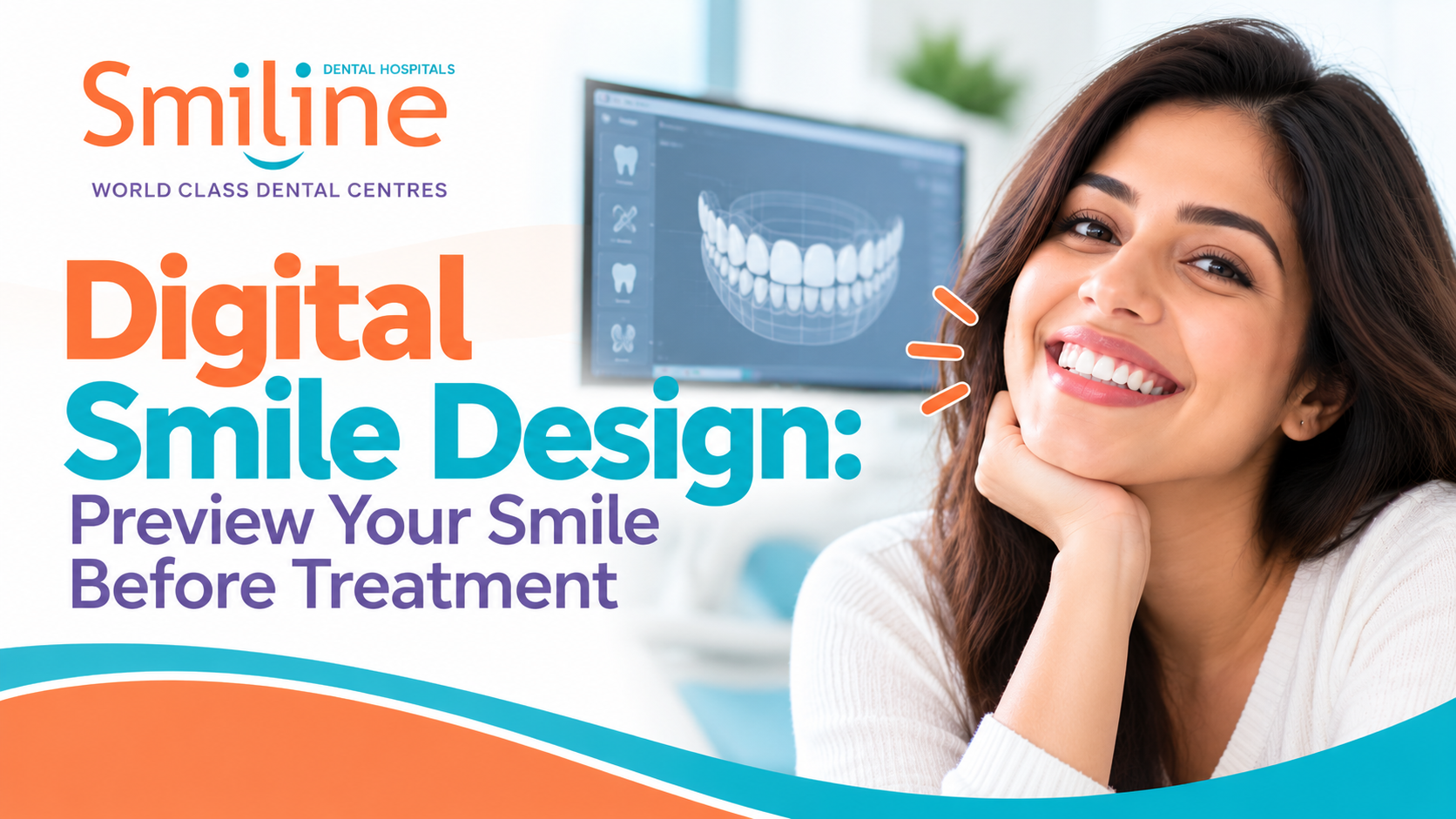
Many people who are unhappy with their smile hesitate to get a makeover for one simple reason: they cannot picture the end result. Will veneers look natural? Will straighter teeth suit your face? What if you spend time and money and do not like how it turns out?
Digital smile design was developed to address exactly this uncertainty. It uses photographs, videos and scans of your face and teeth to plan treatment and, in many cases, lets you see a simulated version of your new smile before any permanent work begins. It is not a guarantee of an identical outcome, but it can make decisions far clearer.
What Is Digital Smile Design?
Digital smile design, often shortened to DSD, is a planning method used in cosmetic and restorative dentistry. Instead of designing a smile only by eye or with plaster models, the dentist uses digital images and specialised software to study how your teeth relate to your lips, gums, face and facial expressions.
The aim is a smile that fits your features rather than a standard template. Factors such as tooth length, width, shape, colour, the gum line and the midline of your face are all considered together.
DSD is a planning tool rather than a treatment in itself. The plan it produces then guides procedures such as veneers, crowns, aligners, teeth shaping or gum contouring.
How the Digital Smile Design Process Works
While each clinic’s approach differs slightly, the process usually follows these stages:
- Consultation: You discuss what you dislike about your smile and what you would like to change
- Photographs and video: Images of your face and teeth are taken at rest, while smiling and while speaking
- Digital scans: An intraoral scanner records a 3D model of your teeth, often replacing traditional impression trays
- Design: The dentist uses a digital smile design program to plan the shape, size and position of the teeth
- Review: You see the proposed design and discuss changes before treatment is finalised
This shared planning stage gives you a chance to ask questions and give feedback before anything irreversible is done to your teeth.
Can You Really Preview Your Results First?
In many cases, yes. Digital smile simulation allows you to see an approximation of your future smile on screen, overlaid on your own photograph or video. Some clinics use 3D smile design software that lets you view the planned teeth from different angles.
Many dentists then go one step further with a physical “mock up”. Using the digital plan, a temporary tooth coloured material is placed over your existing teeth for a short time. This lets you see and feel the new shape in your own mouth, check how it looks when you talk and smile, and even show it to family before committing.
It is important to keep realistic expectations. A simulation is an approximation, not a photograph of the future. Final results depend on factors such as the health of your teeth and gums, the materials used, how your mouth heals and how well you care for your teeth afterwards.
What Smile Designing Software Can and Cannot Do
Smile designing software is a valuable communication and planning tool. It can:
- Help you visualise proposed changes before treatment
- Highlight proportions and symmetry that are hard to judge in a mirror
- Guide the dental laboratory in making veneers or crowns
- Improve communication between you, the dentist and the technician
However, software cannot replace clinical judgement. It cannot show hidden problems such as decay, gum disease or bite issues, which must be diagnosed and treated first. A design that looks ideal on screen may also need adjustment if it would place too much strain on the teeth or jaw.
Who May Benefit From Digital Smile Design?
Digital smile design is often considered for people planning:
- Veneers or crowns to change the shape, size or colour of several teeth
- A full smile makeover combining several treatments
- Orthodontic treatment such as clear aligners
- Gum contouring to correct a “gummy” smile
- Restoration of worn, chipped or uneven teeth
It may be less necessary for simple single tooth treatments, although some dentists still use digital tools to plan them.
Questions to Ask Before You Begin
Before starting, it helps to ask your dentist:
- Will I see a digital preview, a physical mock up or both?
- Which treatments does the plan involve, and are any irreversible?
- How closely is the final result expected to match the preview?
- How long will the results last, and what maintenance is needed?
Seeing Your Smile Before You Commit
Digital smile design uses photographs, video, scans and specialised software to plan treatment around your facial features. Digital simulations and physical mock ups can let you preview a likely result and give feedback before permanent changes are made. While previews are approximations and cannot guarantee identical outcomes, they support clearer decisions and better communication.
Any underlying dental or gum problems still need to be diagnosed and treated first, before cosmetic work begins. The cosmetic dentistry team at Smiline Dental Hospitals, Hyderabad uses digital planning for treatments such as veneers, aligners and smile makeovers, alongside a full assessment of oral health.
Frequently Asked Questions
Is digital smile design painful?
No. The planning stage involves photographs, videos and scans, none of which are painful.
Does digital smile design cost extra?
This varies between clinics. Some include it in cosmetic treatment planning, while others charge separately.
Can I change the design after seeing it?
Usually yes. The preview stage is designed for discussion, so adjustments can often be made before treatment begins.