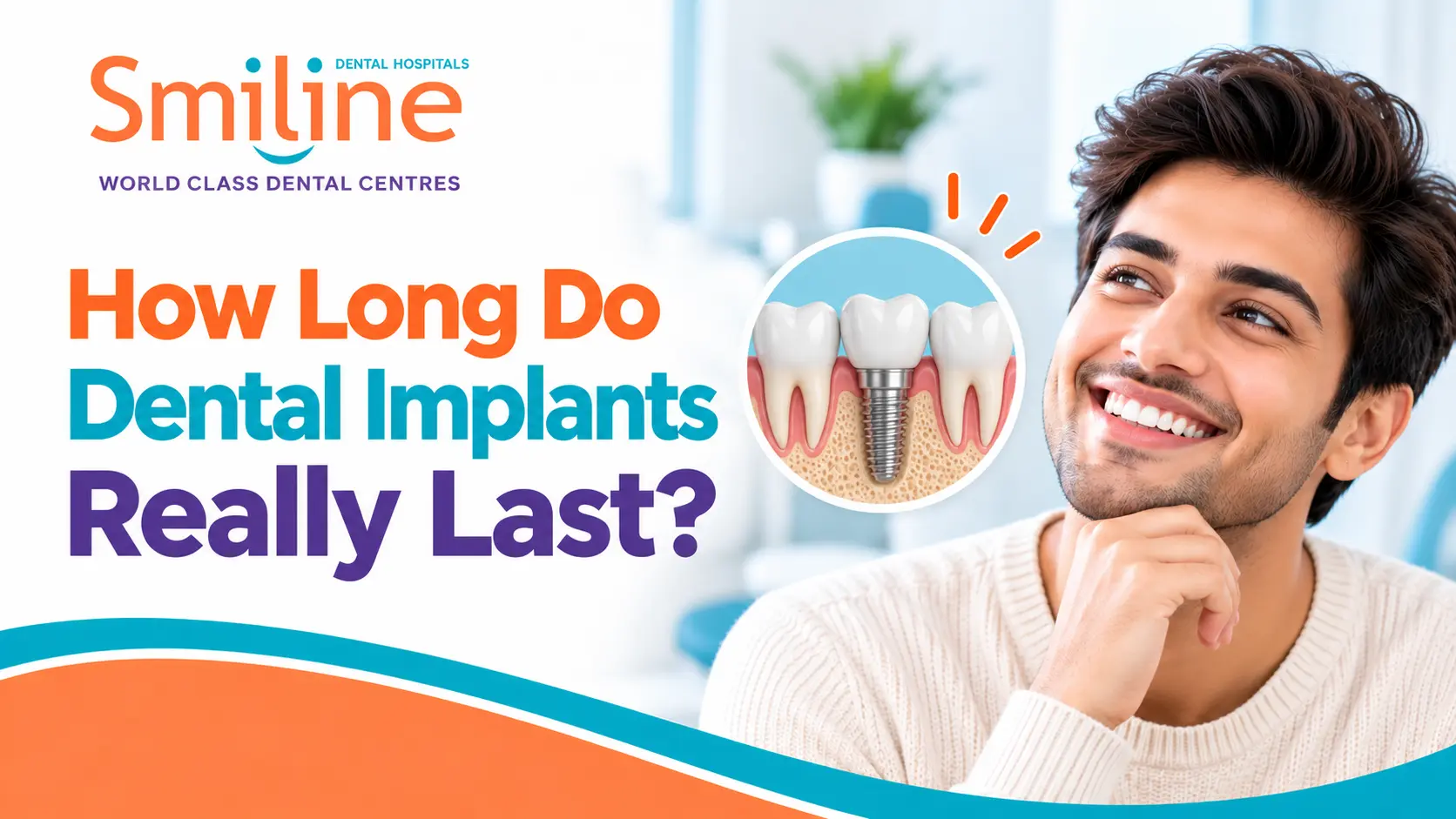
What Really Affects How Long Your Dental Implants Will Last
Dental implants have a strong record for longevity, yet they are not permanent in the way many patients assume. Most last for decades, but some develop problems, and the difference often comes down to factors that the patient and the dentist can control.
This blog explains how long dental implants last, what influences that, the main causes of implant failure, the warning signs that something is wrong, and how to protect an implant over the years.
How Long Do Dental Implants Last?
The answer has two parts. The implant is the titanium post fused to the jawbone, and it is designed for decades of service. The crown, bridge, or denture attached to it takes the daily wear of chewing and usually needs replacement after about 10 to 15 years. Dental implants commonly last 20 years or more, and many stay in place for much longer when the surrounding gum and bone remain healthy.
No dentist can promise that an implant will last a lifetime, because longevity depends on the body that holds it. Bone health, gum health, habits, and general health all keep changing with age. A well-planned implant in a healthy mouth, with regular maintenance, has the best chance of lasting a very long time.
What Affects the Longevity of Your Dental Implants?
Several factors work together to influence how long dental implants last:
- Gum health: An implant cannot get a cavity, but the gum and bone around it can become infected. A history of gum disease raises the risk, which is why gum disease treatment before and after an implant matters.
- Daily cleaning and professional care: Plaque builds up around an implant just as it does around natural teeth, so thorough cleaning between the teeth and regular professional cleaning protect the surrounding tissue.
- Smoking: Smoking reduces blood flow and slows healing, which raises the risk of infection and implant failure.
- Diabetes and general health: Poorly controlled diabetes slows healing, and some health conditions and medicines can affect bone health.
- Bone quality and planning: An implant needs enough healthy bone. Bone grafting can rebuild support where it is lacking, and 3D scans through digital imaging help position the implant safely.
- Bite forces: Teeth grinding puts extra load on implants, and a night guard can help protect them.
- Quality of the restoration: A well-fitting crown made from durable material, such as zirconia crowns, reduces the risk of mechanical problems.
What Are the Main Implant Failure Causes?
Dental implant failure falls into two broad types. Early failure happens in the first weeks to months, when the implant does not fuse properly with the bone, a process called osseointegration. Implant failure causes at this stage include infection at the surgical site, insufficient bone, smoking, poorly controlled diabetes, and excessive force on the implant while it heals.
Late failure develops after the implant has been in use for months or years. The most common cause is infection and bone loss around the implant, known as peri-implantitis. A 2025 review of 102 studies found that peri-implantitis affects around 21% of patients with implants, and it identified gum disease and smoking as key risk indicators. Other late causes include heavy biting forces, grinding, loose screws, and a fractured crown or connecting part.
Most failures have more than one cause, but the good news is that many can be treated when caught early.
What Are the Warning Signs of a Failing Dental Implant?
Early signs are often subtle and not always painful. Watch for:
- Gums around the implant that are red, swollen, or bleed when brushing.
- Pus, a bad taste, or persistent bad breath near the implant.
- Pain or tenderness when biting, or discomfort that does not settle after healing.
- Gums that recede and expose the metal threads of the implant.
- A change in how the teeth bite together.
- Any movement of the implant itself.
A loose crown is not the same as a loose implant, and it is often a simple fix, such as tightening a screw. Even so, any of these signs deserves a dentist's assessment promptly, because early infection around an implant is far easier to treat than advanced bone loss.
How Can You Protect Your Implants for the Long Term?
Brush twice a day with a soft brush and clean between the teeth daily, using interdental brushes or a water flosser around the implant. Professional cleaning is generally advised every 3 to 6 months through general dentistry, with teeth deep cleaning when the gums need it.
Avoid smoking, keep diabetes under control, wear a night guard if you grind your teeth, and do not use your teeth to open packets or chew ice. Early attention to bleeding or swollen gums makes sure small problems remain small.
Making Implants Last
Dental implants can last for decades, but their longevity depends on healthy gums and bone, good daily cleaning, regular professional care, and avoiding habits such as smoking. Most failures can be traced to infection, poor healing, or excessive force, and many can be caught early when the signs are recognised.
Smiline Dental Hospitals offers dental implants in Hyderabad, supported by periodontics, prosthodontics, and bone grafting services at its Panjagutta, Hitech City, and Nanakramguda clinics.
Frequently Asked Questions
Can a failed implant be replaced?
Often yes. Once the area has healed and the cause has been addressed, a new implant can frequently be placed, sometimes after a bone graft. The plan depends on why the first implant failed and on the condition of the bone.
Does an implant need to be replaced every 10 years?
No. The implant post is intended to last far longer. It is usually the crown that needs replacement after 10 to 15 years because of wear.
Will I feel pain if my implant is failing?
Not always. Early infection and bone loss around an implant can be painless, which is why bleeding gums or a change in bite should not be ignored, and why regular check-ups matter.
Can I have an implant if I have had gum disease?
In many cases yes, once the gum disease is treated and controlled. The risk of infection around the implant is higher, so closer maintenance is usually advised.